Mottos
UNG LOY-UNG FOY-UNG ROY
MAJOR MILES CHARLES CARISTON SETON
Well I certainly didn't expect this when I looked up this curious inscription. Mind you, it wouldn't be quite so curious if it wasn't set out like this, this is probably how it was meant to be: 'Ung loy - ung foy - ung roy'. But it would have been even clearer without the dashes. It's the Seton family motto and it's in Old French and means, 'One law, one faith, one king'.
However, that's not what I didn't expect. Major Seton died on 13 January 1919. I assumed it would be from wounds or influenza but it wasn't. Seton was murdered by a fellow officer, Lieutenant-Colonel Norman Cecil Rutherford, as The Times reported on 15 January:
"Late on Monday night Major Miles Charles Cariston Seton, CB, Australian Army Medical Corps, was shot dead in the drawing room of the house of his cousin, Sir Malcolm Cotter Cariston Seton, CB, in Clarendon Road, Holland Park, W. Lieutenant-Colonel Norman Cecil Rutherford, DSO, RAMC, (TF), was charged at the West London Police Court yesterday morning with causing his death."
The murder caused a sensation and events were closely followed in the press. Rutherford, who had shot Seton eight times, made no attempt to escape and waited patiently for the police to arrive at which point he was arrested. Two weeks later an inquest concluded that he should be sent for trial on a charge of murder.
Rutherford came to trial in April and pleaded 'not guilty'. The jury heard that Seton had become very familiar with Mrs Rutherford and her children, and that Mrs Rutherford wanted a divorce. Throughout the trial her reputation was constantly protected, the story being that Rutherford believed that Seton was turning his children against him. Rutherford was found not guilty but insane and was sentenced to be detained at His Majesty's pleasure in Broadmoor.
Undoubtedly Rutherford's war record, both his DSO and the fact that he had been buried alive by a shell, as well as a family history of insanity, told in his favour. He was released after ten years and spent he rest of his life abroad in Canada, Vienna, Persia and South Africa where he died in 1951.
Seton was buried in Brookwood Military Cemetery and his sister, Isobel, chose his inscription. He may not have died as a result of the war but anyone serving in the armed forces of King George V, who died between 4 August 1914 the 31 August 1921 from whatever cause - including murder - was deemed to be a casualty of the war and entitled to a war grave.
RECTE FACIENDO SECURUS
LIEUTENANT ROBERT INGLIS MC
Recte faciendo securus - by acting justly you need fear nothing - is the Inglis family motto.
Robert and Isabella Inglis of Lovestone, Girvan, Ayrshire had ten children: four daughters and five sons. I think you might be able to tell where this is going. The eldest son, Alexander, was killed in South Africa in 1901, the youngest son, David, was killed in France on 19 December 1914, Charles, the third son, on 25 September 1915, and Robert, the second eldest, died of wounds on 5 October 1918. William was the only one of the five sons to survive.
Prior to the war, Robert Inglis had been joint factor with his father of the Bargany Estate in Ayrshire and a sergeant in the Scottish Horse Yeomanry. In September 1914, he was commissioned second lieutenant and after a period of service in England embarked on 1 January 1916 to join the Egyptian Expeditionary Force on the Suez Canal. In October 1916 the Scottish Yeomanry became the 13th Battalion Royal Highlanders (Black Watch) and in June 1918 the battalion was moved to France. Inglis was wounded on 3 October 1918 when 'C' Company co-operated with the Royal Dublin Fusiliers in an attack on Le Catelet and Gouy. The battalion war diary mentions that "there was considerable sniping causing several casualties". Inglis died the next day.
Recte faciendo securus - by acting justly you need fear nothing. The reference of course is to salvation rather than to having nothing to fear in this earthly life.
STAND FAST CRAIGELLACHIE
SECOND LIEUTENANT ALEXANDER GRANT
By choosing this motto for his only son, Alexander Grant Snr was establishing his kinship with Clan Grant whose motto and war cry this is. He may also have had in his mind a painting by Lady Butler called Stand fast Craigellachie, which shows a highland soldier standing guard over the wounded during an incident on the North West Frontier in India in 1895, thus claiming by association the same heroic qualities of the highland soldier for his son.
Stand fast may be understood today as an instruction but at one time it was a quality, a synonym for steadfast. Craigellachie, a hill with a commanding view of the Strathspey, is a symbol of strength and watchfulness for the Grants; it's the place where beacons were lit to alert the community to danger - to the need to stand fast, and to be steadfast.
In 1911, Alexander Grant KC of Lincoln's Inn, born in Bolton, Lancashire was living at 37 Hans Place, Chelsea with his second wife and his three children. Alexander Jnr, who was educated at Eton, would have gone to Trinity College, Cambridge when he left school in 1917. Instead he was commissioned into the 1st Battalion Grenadier Guards in December that year. He went to the front on 29 April 1918 where he served continuously until he was killed in action on 27 September, the day the Guards crossed the Canal du Nord on the Hindenburg Line. Grant is buried in Sanders Keep Cemetery, which took its name from the German stronghold captured that day.
Grant's death was announced in The Times on 9 October; his father proudly quoting from a letter he'd received from his son's captain who wrote:
"I had seen a good deal of his conduct during the morning, and every time I saw him he was smiling and cheerful, moving about and encouraging his platoon to do their utmost in a most difficult attack ... He died upholding the great traditions of his school and his regiment ... He was a true Grenadier, and understood the full meaning of Vitae lampada traduit."
Vitae lampada traduit - they hand on the torch of life - a phrase forever associated with Sir Henry Newbolt's poem Vitae Lampada where at a desperate moment in a battle it's the voice of a schoolboy who rallies the ranks with his cry of 'play up, play up and play the game'.
"SECOND TO NONE"
SECOND LIEUTENANT RALPH VIVIAN BABINGTON
Second to none, in other words, in a class of his own, unmatchable. It's a lovely inscription for a father to choose for his son. As it's in inverted commas, I thought it must have been a quote from something like a letter of condolence but then James Kerr (@JamesKerr125) pointed out to me that it is in fact a translation of the Coldstream Guards' motto 'Nulli Secundus'.
Ralph Babington was the youngest of five sons. One gets the feeling that he was not robust. In fact one of the reports following his death refers to the fact that "In that small body there was a giant heart". He seems to have been intended for a career in the navy but after spending some time as a cadet at the Royal Naval College, Osborne his health broke down when he was 14 and it was a year before he recovered enough to be sent to Eton. In 1916, when he was 17, he went to Sandhurst, all the time desperate that the war might be over before he'd had a chance to take a part in it. His chance came soon enough and unfortunately it was his life that was over before the war was.
Babington's medal card says that he first entered a theatre of war on 9 October 1917 and that he was killed in action on the 9 November but the 9 October was the date of his death so it's not really possible to say how long he'd been at the front. He was killed when the 3rd Battalion Coldstream Guards took part in an assault near Ypres between "Broembeke and Houlthoulet Forrest". According to a report in the Eton Chronicle: "He was leading his platoon to the forming-up area on the night of October 8-9, when a German shell burst close to him, killing him instantaneously, and many of his men".
Babington was one of the 5 officers and 35 other ranks killed that day.
"SINE METU"
SECOND LIEUTENANT ERIC LIEUELLEN JAMIESON
Sine metu - without fear - is the motto of the Jameson family of the Irish whiskey brand. Eric Jamieson's brother, Andrew, chose his inscription, putting it in inverted commas. Was he indicating that the two families were related? Although John Jameson, to whom the arms and motto were granted in the mid 1800s came from County Galway, Ireland, his grandfather, John Jameson, came from County Clackmannan, Scotland. There could therefore have been a tangental connection.
Eric Jamieson was one of eight children. He had a twin brother, Ion, who became an expert in traditional Scottish country dances in the 1930s. In 1911 both Eric and Ion were apprentices. Unfortunately whoever transcribed the census has written 'Apprentice Statione', whatever that might mean.
Eric served with the 11th Battalion Argyll and Sutherland Highlanders. On 22 August 1917 the Battalion was in the front line north of the Ypres-Roulers Railway line. The war diary reported that at 4.45 am the British barrage opened and the battalion advanced to be met almost immediately by heavy machine gun fire and sniping. By 6.05 the telephone lines had been cut, it was impossible for runners to get through and battalion HQ became dependent on pigeons for information.
The Battalion remained in the front line on the 23rd, described by the author of the diary as a 'trying day', at the end of which Lt J.F.C. Cameron was the only officer in the front line. The Battalion came out of the line with its C.O. Adjutant Lt Cameron and some 140 O.R.s. Lt E.L Jamieson was among the missing, a fact reported in the Linlithgow Gazette on 7 September, which hoped that he might be a prisoner. But a month later the same paper reported that it was believed he had fallen on the day he went missing.
It was October 1920 before his body was found in an unmarked grave, identified by his disc, badge and pince-nez glasses.
RATHER DEATHE
THAN FALSE OF FAYTHE
SECOND LIEUTENANT JOHN PERCY HODGES
The phrase would seem to date from the sixteenth century where it appeared on jewellery, presumably worn by people prepared to declare their willingness to die for their faith. In the nineteenth century, it became the motto of Sir Walter St John School Battersea, although it does not seem to have been the motto of its seventeenth-century founder.
Percy Hodges was a pupil at this school, his name appearing on a plaque, now in St Mary's Church, Battersea. The plaque refers to a stained glass window, which doesn't appear to have survived. The motto appears at bottom of the plaque after the list of the 78 boys who "gave their lives for King and Country in the Great European War 1914-1919" - "Rather deathe than false of faith".
Hodges, the son of a commercial clerk, served with the 6th Battalion King's Own Scottish Borderers and was killed in action on 25 April 1918 in a German attack on Kemmel. The 6th Battalion's two forward companies were all either killed or captured in the action. Hodges body was discovered at map reference 28/N.16.d.3.6 in November 1919. Although there was no marker on the grave the body still had its identity disc. His father chose his inscription.
PRO ARIS ET FOCIS
SECOND LIEUTENANT EDGAR DANIELL GIBSON
There is a beautiful stained glass window in the Lady Chapel of the church of St Mary the Virgin, Oxted, which shows the martial saints Martin and George. The dedication reads:
To the glory of God and in undying remembrance of Malcolm Reginald Gibson, Lt 7th East Surrey Regt, killed in action at Hulloch, France, on 8th Oct 1915 aged 25 and Edgar Darnell Gibson, 2nd Lt RFC, killed on active service near Bethune, France, on 9th Oct 1917, aged 19. Dearly loved eldest and youngest sons of Walter M and Katherine M Gibson - Oxted.
Both brothers have the same inscription, 'Pro aris et focis', the family's motto. This translates literally as 'for our altars and fires', the equivalent of hearth and home. In the Christian world it came to mean both for what was both the sacred and the civil good: God, family and country. The boys' father, Walter Gibson, chose it as his motto when he was knighted in 1920 for his services to the British crown. He had been Secretary to the Privy Purse through the reigns of Queen Victoria, King Edward VII and King George V.
Maurice Reginald Gibson, educated at Radley College and Exeter College, Oxford, volunteered in August 1914 on the outbreak of war and served as a machine gun officer with the East Surrey Regiment. He was killed in action on 8 October 1915.
His brother Edgar, educated at Wellington College, joined the RFC when he left school and went to the front on 22 August 1915. He was killed the day after the second anniversary of his brother's death, on 9 October 1917. Edgar Daniell Gibson's second name is spelt variously as Daniel, Daniell and Darnell. I believe that Daniell is the correct spelling because that was his Gibson grandmother's maiden name.
The middle brother, Claude Manley Gibson, also served in the RFC. On 16 May 1916 he was returning from a patrol when his plane was hit by ground fire. The plane crashed into a ploughed field but Gibson survived with only minor injuries.
IN DEO CONFIDO
LIEUTENANT CHARLES LAWFORD DIVINE
'In deo confido': I trust in God. Although Charles Divine was married it was his mother Ellen who chose his inscription. Born Ellen Lawford, 'In deo confido' was her family motto.
To begin with, Charles Lawford Divine was a puzzle. Why, when he died on 20 January 1918, was he buried in Gallipoli? The British army had abandoned the place two years earlier, leaving it in enemy hands and didn't get back onto the peninsula until the war was over. The answer lies in the fact that he was killed in a naval engagement off the island of Imbros and in all probability was originally buried on one of the Aegean islands. After the war many of these graves were exhumed and the bodies gathered in and reburied in the larger cemeteries on Gallipoli.
On 20 January 1918 four naval vessels, HMS Tigris, Lizard, Raglan and M28, a naval shore bombardment vessel, were caught in Imbros harbour by two Turkish warships, the ex-German battlecruiser SMS Goeben and the lightcruiser, the former SMS Breslau . Tigris and Lizard escaped but Raglan and M28 were sunk, the former with the loss of 130 lives, and M28 with the loss of 12 of her 69-man crew. The battle later turned against the Turkish ships and Allied ships were able to pick some of the survivors. Lieutenant Divine was rescued but died of his wounds later the same day.
BETTER DEATH THAN DISHONOUR
HE FELL OBEYING DUTY'S CALL
LANCE CORPORAL J.A. MORGAN
MISSING
Corporal J.A. Morgan, Royal Warwickshire Regiment, wounded and missing. He is the husband of Mrs M. Morgan 109 Coedpenmaen Road, Pontypridd and before joining the Army worked at the United National Collieries, Wattstown. His wife would welcome any information.
Western Mail 30 November 1917
Lance Corporal Morgan's body was eventually discovered at map reference D1 B50 10 in October 1921. Until then his wife would not have not received any firm information.
It was Mrs Morgan who chose her husband's inscription: 'Better death than dishonour'. It's the motto of the Welsh Regiment, yet Lance Corporal Morgan died serving with the Royal Warwickshire Regiment. However, Mrs Morgan lived in Pontypridd, Glamorgan, Wales where her husband is commemorated on the town war memorial. The majority of names on this memorial belong to men of the Welsh Regiment, which recruited in the town, so it's more than likely that this was the regiment Morgan originally joined. He had probably been wounded and on recovery was sent to reinforce the Warwickshires. But from his inscription his heart, or certainly his wife's heart, remained with his original regiment.
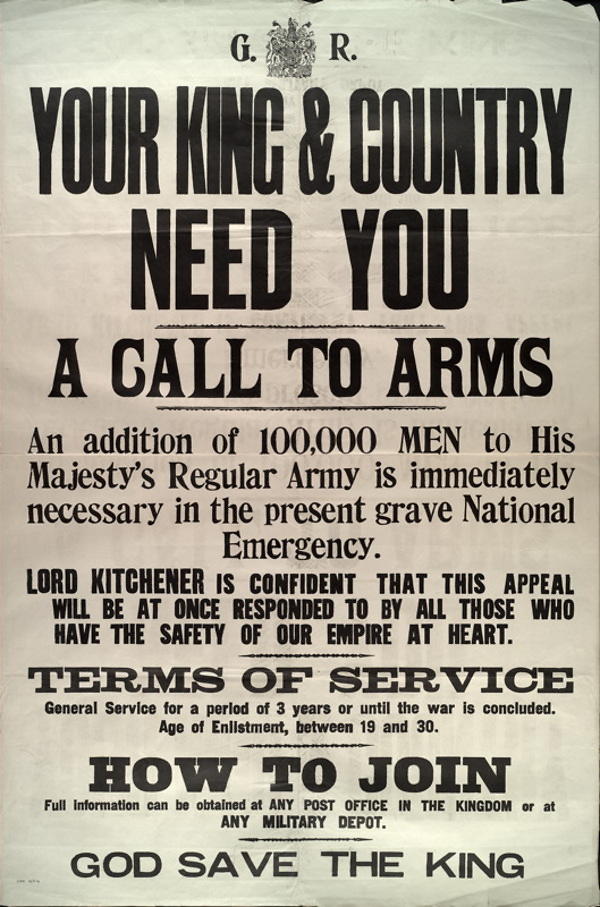
I can't decide whether the second part of the inscription, 'He fell obeying duty's call', suggests that Morgan was a volunteer or a conscript. Conscription for married men was introduced in May 1916. However, the 'call' usually refers to the 'call to arms' of the original recruiting posters, which would suggest that Morgan obeyed the call of duty to his King and country and was a volunteer.
"SPES TUTISSIMA CAELIS"
GUNNER MAURICE DUNCAN BENJAMIN
The word is spelt 'caelis' in the War Grave Commission's records whereas some people would spell it 'coelis' but the meaning is the same - heaven - the surest hope is in heaven. I can't work out the significance of the quotation marks though. The phrase is the motto of some armigerous British families, but I haven't been able to discover a link between the Benjamins and these families.
Maurice Benjamin was killed at Passchendaele on 26 August 1917. In 1921 the bodies of five unidentified soldiers wearing Australian uniforms and boots were discovered at map reference 28.I.29.b.20.25. The Commission's records note:
"These five Australian soldiers' remains were properly buried in blankets and the graves equally spaced and probably all Artillery men as all were dressed like cavalry men."
It's the first time I've noticed this comment, that the bodies were "properly buried", and that this meant wrapped in blankets and equally spaced out. And it turns out that they were all Artillery men, all Gunners from the same Battery and in all probability from the same gun. All killed together and buried together by people who did it properly - even though the graves were not initially found and recorded by a Graves Registration Unit - and all subsequently identified.
Despite the fact that all five men were missing presumed killed in action none of their families instituted a Red Cross Enquiry. In fact, there is a Red Cross file in Maurice Benjamin's name in which there is a copy of a letter dated "September 17th 1917", to "The Manager, Bank of Queensland, 4 Queen Victoria Street, E.C", following up "our telephone conversation this morning", which says:
"We understand that you do not wish us to make inquiries for details of his death and burial."
Maurice Benjamin worked as a teller for the Bank of Queensland in Sydney before he joined up in October 1916. He left Australia in February 1917. It was 1930 before his mother filled in the circular for the Roll of Honour of Australia and this is something else I've never noticed before,the stamp on the front of the document, which indicates the length of time that it took for these records to be compiled. In Gunner Benjamin's case:
Next-of-kin communicated with for records and relics
Letter no. 12/11 3890
Date 6 Aug 1930
THEY WIN OR DIE
WHO WEAR
THE ROSE OF LANCASTER
LIEUTENANT LEONARD COMER WALL
"We live or die who wear the rose of Lancaster" is the motto of the 55th (West Lancashire Division), which they adopted from a poem that Leonard Comer Wall had himself written.
It was during the First World War that the 55th Division took the red rose of the House of Lancaster as their emblem. This apparently prompted Wall, a young officer serving with the Division, to write a poem, which was published on 13 April 1917 in the Liverpool Daily Post. It's actually more a piece of patriotic verse promoting Lancashire than a poem:
Red Roses
When Princes fought for England's crown,
The House that won the most renown,
And struck the sullen Yorkists down,
Was Lancaster.
Her blood-red emblem stricken sore,
Yet steeped her pallid foe in gore,
Still stands for England evermore,
And Lancashire.
Now England's blood like water flows,
Full many a lusty German knows,
We win or die - who wear the rose
Of Lancaster.
Wall was killed two months later, on 9 June 1917, and the following announcement appeared in the Liverpool Daily Post on the 14th:
"WALL - June 9 killed in action in his 21st year, Leonard Comer Wall (Lieutenant R.F.A.) only and most-beloved child of Charles Comer and Kate Wall, Hill Top, West Kirby, and the affianced husband of Irene Dorothy Bryan, Braxted Rectory, Sevenoaks, Kent. (We win or die who wear the rose of Lancaster)
Either the death announcement or the original poem came to the attention of General Jeudwine, the 55th's Divisional Commander, who ordered that the final words should become the Division's motto, which they did. And at the end of the war all 55th Division graves had an enamel badge, with the rose and the motto, attached to their wooden cross. When the time came for Mr and Mrs Wall to chose an inscription for their son's permanent headstone, they chose the last line of his poem, having changed the word "we" to "they".
There is another lovely story associated with Lieutenant Wall, an officer in the Royal Field Artillery. Wall was killed by shrapnel, which injured his horse, 'Blackie', and killed his groom. After the war, "Blackie' returned to England and when he eventually died in 1942 this notice appeared in the 14 December edition of the Liverpool Daily Post:
"At the Horses' Rest (R.S.P.C.A.), Hunts Cross, on December 10, BLACKIE, truest comrade in England, France and Flanders (1915-1917), of the late Leonard Comer-Wall, Lieutenant, A Battery, 275th Brigade, RFA, 55th Division, and the late Driver Frank Wilkinson, his groom. Ubique."
This was twenty-five years after the death of Blackie's rider and groom. I wonder who inserted it? Leonard Wall's father died in 1928 but his mother was still alive. Two days later, the 'Gloucester Citizen' elaborated on the story reporting that, Blackie, "was buried with the medals of his master, Lieut. Leonard Comer Wall ... who while riding 'Blackie' was killed in France." The story is repeated several times on the Internet but I haven't discovered whether it is true or not.
Blackie has a headstone, which reads:
'Blackie'
Aged 35 years
A Battery - 275th Brigade R.F.A. 55th Division
France and Flanders 1915-1918
Does this tell us anything else? Yes, that although his rider and groom were killed in 1917, someone in the Wall or Wilkinson family kept track of the horse and brought him home to England in 1918 to live out his days in peace. Someone who cared enough to insert a notice of his death in the local paper and to erect a headstone for him. My money would be on Leonard's mother, who died in 1954.
EVERYWHERE
WHERE DUTY AND GLORY LEADS
SECOND LIEUTENANT ALFRED JOHN HUNT
Alfred Hunt served with the Royal Field Artillery whose regimental motto - Quo fas et gloria ducunt - translates as, where right and glory lead. Mrs Bessie Hunt, who chose this inscription, changed the word 'right' to 'duty'. Her son had seen a meteoric change in his military status since the beginning of the war having been promoted from corporal to sergeant and then commissioned as a second lieutenant all in a matter of weeks.
Alfred Hunt had been at the front since August 1914 as a letter to his mother, written on 27 October makes clear. He was wounded in the head by shrapnel on 25 November and died in hospital three days later having never regained consciousness.
On 18 July 1915, his younger brother, Frank, serving with the 13th Hussars, was killed in action aged 18. His inscription reads:
To live in hearts
We leave behind
Is not to die
HOMO PLANTAT HOMO IRRIGAT
SED DEUS DAT INCREMENTUM
SECOND LIEUTENANT GEOFFREY ARTHUR WARD
Homo plantat homo irrigat sed deus dat incrementum (Man planteth and watereth but God giveth the increase) is both the motto of the Merchant Taylors' School, where Geoffrey Ward had been a pupil, and the first two lines of the chorus of its school song:
Man plants, man waters,
But God bestows growth.
Man plants, man digs,
Man waters and tends carefully,
But it is only by God's cherishing
That he produces growth.
The 7th Battalion The Queen's Own Royal West Kent Regiment was heavily engaged in the Somme campaign from the first day and throughout the whole of July. Most of August was spent in the comparative quiet of Flanders before it returned to the Somme at the end of August. Second Lieutenant Ward was killed in action on 30 September during the closing stages of the 18th Division's attack on the Schwaben Redoubt. Brought into the action on 26 September, by the time the 7th Battalion were withdrawn on 5 October they had lost all but one of the officers who had gone into action on the 26th, together with 70 soldiers.
Mrs Geoffrey Ward chose her husband's inscription. She also added some extra biographical details to the War Graves Commission register, noting that he had enlisted in August 1914 so was a very early volunteer, and that his father had been the scholar Henry Leigh Douglas Ward (1825-1906) of the Department of Manuscripts at the British Museum.
FIDUS ET AUDAX
LIEUTENANT ROBERT GORDON SLADE
Fidus et audax, faithful and brave, is the motto of the Slade family of Maunsel House, Somerset. Robert Gordon Slade's father was a manufacturing confectioner in Harrogate. It looks as though this could have been a family business and from the 1911 census that two of the sons, Arthur and Leonard, were working in it. However, a gravestone in Harlow Hill Cemetery, Harrogate gives the later history of the family. Arthur died in 1911 and Leonard whilst serving with the Royal Flying Corps in 1915. Robert Gordon Slade, serving with the Royal Field Artillery, died of wounds in hospital in Belgium on 18 April 1918, and the youngest daughter, "dear Marjorie", in 1924.
VITAI LAMPADA TRADUNT
SECOND LIEUTENANT BRIAN GEORGE CASSAN SIMPSON SIMPSON
Vitai lampada tradunt, they hand on the torch of life, is a quotation from De Rerum Natura a poem by the Roman philosopher Lucretius. It is also the motto of the Shore School, Sidney Church of England Grammar School, where Brian Simpson was educated. Here, as one of their best shots, Simpson was in the rifle team, as he was at university too.
There are two versions of his death. One version has him climbing a tree overlooking the German trenches in order to observe the fire of his guns. The other has him climbing a tree, in full view of the Germans, in order to shoot a sniper. Both versions have Simpson being shot as he climbed down. Knowing his record with a gun it is quite likely that he was trying to get a sniper. He is said to have died peacefully in his sleep in hospital a week after being wounded.
There is an obituary of Simpson in the Shore School magazine, Hermes (August 1918), and on the St Paul's College website taken from the university magazine, The Pauline. Here a friend wrote:
"We recall him in his room at College - amidst the smoke and laughter of many friends, and surrounded by those pictures of his choice which invariably called forth the good-humoured banter of men less artistic than himself."
When the war broke out, Simpson was in London studying sculpture. He joined the army on 4 August 1914, enlisting first in King Edward's Horse before taking a commission in the artillery. He then transferred to the Trench Mortars to get closer to the action.
The idea of the torch of life being handed from generation to generation was a common image. It appears in John McCrae's In Flanders Fields:
Take up our quarrel with the foe:
To you from failing hands we throw
The torch; be yours to hold it high.
If ye break faith with us who die
We shall not sleep, though poppies grow
In Flanders fields.
'Vitai Lampada', the torch of life, is the title of Sir Henry Newbolt's most famous poem, which was greatly admired by the pre-First World War generation and has been greatly ridiculed pretty much ever since. I rather like it.
There's a breathless hush in the Close tonight
Ten to make and the match to win -
A bumping pitch and a blinding light,
An hour to play and the last man in.
And it's not for the sake of a ribboned coat,
Or the selfish hope of a season's fame,
But his Captain's hand on his shoulder smote
"Play up! play up! and play the game!"
The sand of the desert is sodden red, -
Red with the wreck of a square that broke; -
The Gatling's jammed and the colonel dead,
The regiment's blind with dust and smoke.
The river of death has brimmed his banks,
And England's far, and Honour a name,
But the voice of a schoolboy rallies the ranks,
"Play up! play up! and play the game!"
This is the word that year by year
While in her place the School is set
Every one of her sons must hear,
And none that hears it dare forget.
This they all with a joyful mind
Bear through life like a torch in flame,
And falling fling to the host behind -
"Play up! play up! and play the game!"
Sir Henry Newbolt 1892
PERSTA ATQUE OBDURA
SECOND LIEUTENANT FRANK COLLETT REEVE BEECHEY
Persta atque obdura, be steadfast and endure - if ever there was an appropriate inscription for a family this is it. Mrs Amy Beechey, the widow of a Church of England clergyman and Frank Beechey's mother, lost five of her eight sons in the war, and of the three who returned one was crippled for life.
Frank Beechey was injured by a shell that blew his legs off. A witness described how he lay out in No-Man's-Land from "dawn to dusk" until a doctor was able to crawl out and administer morphine. Frank was 30 and was the second of the brothers to die.
His older brother, Barnard who was 38, had been killed a year earlier, on the first day of the Battle of Loos, 25 September 1915. Barnard had gone to France in July, reporting to his mother that he had been sick three times during the Channel crossing. On 5 September he told his mother: "I really am all right and don't mind the life only we all wish the thing was over, and those who have been out the longest wish so most of all." Three weeks later "the thing was over" for Barnard, killed in a charge at the German trenches. His body was never found and he is commemorated on the Ploegsteert Memorial.
Harold Beechey was the third brother to die. He had emigrated to Australia in 1913 and was serving with the 48th Battalion Australian Infantry when he was killed at Bullecourt on 10 April 1917. Enquiries from the Australian Red Cross Wounded and Missing Enquiry Bureau elicited the information from a witness that,
"We were digging a dug-out on the night of April 1917 on the railway line between Lagnicourt and Bullecourt when the Germans sent a couple of shells over and he was severely wounded about the body and legs. He died two hours afterwards and was unconscious most of the time".
The eldest of the brothers, Charles, was the next to die. Aged 36 in 1914, he was initially too old for military service and joined up later than his brothers. He was serving in East Africa with the Royal Fusiliers when he died of wounds caused by machine gun fire on 20 October 1917. He was 39. He is buried in Dar-es-Salaam War Cemetery where his inscription reads: Requiescat in pace.
Two months later, on 29 December 1917, Leonard died of wounds in hospital in Rouen having been gassed and wounded at Bourlon Wood. His last letter to his mother, from his hospital bed, concluded with the words: "My darling mother, don't feel like doing much yet. Lots of love, Len".
In April 1918, Mrs Beechey was invited to be presented to King George V and Queen Mary when they visited Lincoln Guildhall. When thanked for her sacrifice she is reputed to have told the Queen, "It was no sacrifice, Ma'am, I did not give them willingly". However, Michael Walsh, whose book on the brothers, Brothers in War reports the meeting with the King and Queen only has this to say: "if she felt anger she did not show it when their Majesties thanked her for her sacrifice". And in fact, Lady Cecilia Roberts, the local MP's wife who Amy Beechey had thanked for helping her secure a pension, replied, "you are very brave and very gracious over all that concerns you - you set a great example to us all".
Michael Walsh describes 'persta atque obdura' as the Beechey family motto, a fact confirmed by the Reverend Canon St Vincent Beechey, founder of Rossall School in Fleetwood, in his book 'Rossall School its Rise and Progress', 1894. The quotation comes from the Satires of Horace Book II, Satire V, line 39.
LALA-GAHLE, UMTA-GWETU
PRO ARIS ET FOCIS
SECOND LIEUTENANT AYLMER TEMPLAR WALES
The word typed onto the form is definitely 'gahle' but I wonder if it was a mistake and the word should have been 'kahle'. I believe that the first line of this inscription is written in Zulu in which language lala-kahle means something like Goodnight or perhaps even rest in peace. However, I've no idea what 'umta-gwetu' means, if indeed this is what it's meant to say.
The second line of the inscription is the Latin motto of Maritzburg College, Aylmer Wales's school in Pietermartzburg, Natal. It comes from Cicero's De Natura Deorum 111.94 and translates as, for our altars and fires. This of course means much more than just altars and fires, it is what the Romans held most sacred, most worth defending, the equivalent of hearth and home, King and country.
Second Lieutenant Wales was 'commissioned in the field' just before his death. This meant that he was identified as officer material and promoted without returning to Britain for officer training. His father, Lieutenant Colonel ATG Wales, makes a point of mentioning this in the War Cemtery Register. Aylmer Wales was killed in Deville Wood where the South African Brigade suffered huge casualties during the Battle of the Somme.
Thanks to Stuart Sinclair I now know that the Zulu translates as 'Goodnight, sleep well'. The difference between ghale and kahle being explained by the transliteration of the Zulu words into Roman characters. Thank you!
DEO DANTE DEDI
CAPTAIN GUY FRANCIS HADLAM KEENLYSIDE
Guy Keenlyside was an old boy of Charterhouse School and this is the school motto - Deo dante dedi: God having given I give. Charterhouse built a Chapel as its war memorial and inscribed on the Foundation Stone are the words, Deo dante dedurunt: God having given they gave.
Keenlyside, a professional soldier, was wounded on 26 October 1914 during the Battle of Neuve Chapelle. He died in a base hospital in Boulogne three days later.
COELUM QUID QUERIMUS ULTRA
LIEUTENANT COLONEL LAURENCE GODMAN
Laurence Godman's epitaph is his family motto taken from Lucretius' De Rerum Natura III.18, 'What seek we more than heaven'. Educated at Rugby School and the Royal Military Academy Woolwich, Godman had seen service in South Africa and India before going to France with the Expeditionary Force in August 1914. He was killed by a shell whilst looking for observation posts in front of the trenches at Messines.
LOYAL AU MORT
MAJOR ERIC GREY DRUMMOND
Loyal au mort, faithful unto death, is the motto of the Drummond family of Invermay. Eric Drummond was a professional soldier who had served with the Indian Army since 1895. He retired in November 1913 but rejoined the army on the outbreak of war. He crossed to France on the 8 November and was ordered to join the 2/3rd Gurkha Rifles near Bethune. He went into the trenches on the 13th and was killed that night leading an attack.